Bee removal Miami-Dade homeowners call about is usually a stinging-insect problem on the house itself. Typical calls from Kendall, Hialeah, Doral, and Cutler Bay involve paper wasps building under a stucco eave, yellow jackets streaming out of a hole in the St. Augustine grass, or carpenter bees drilling neat round holes into a wooden pergola. Those are the stinging-insect jobs this line exists for. Call (772) 783-1112, describe what you're seeing and exactly where the nest sits, and get connected with an independent local pest pro who has the gear to deal with it.
The honest exception: honeybee swarms and established honeybee colonies are not something this line handles, and the pros it reaches aren't the right call for them. A swarm hanging on a palm trunk or a colony living in a wall is a job for a local beekeeper, who can often collect the bees alive. If you're not sure what you have, describe it on the call — the difference between a gray paper nest and a cluster of fuzzy bees usually takes two sentences to sort out.
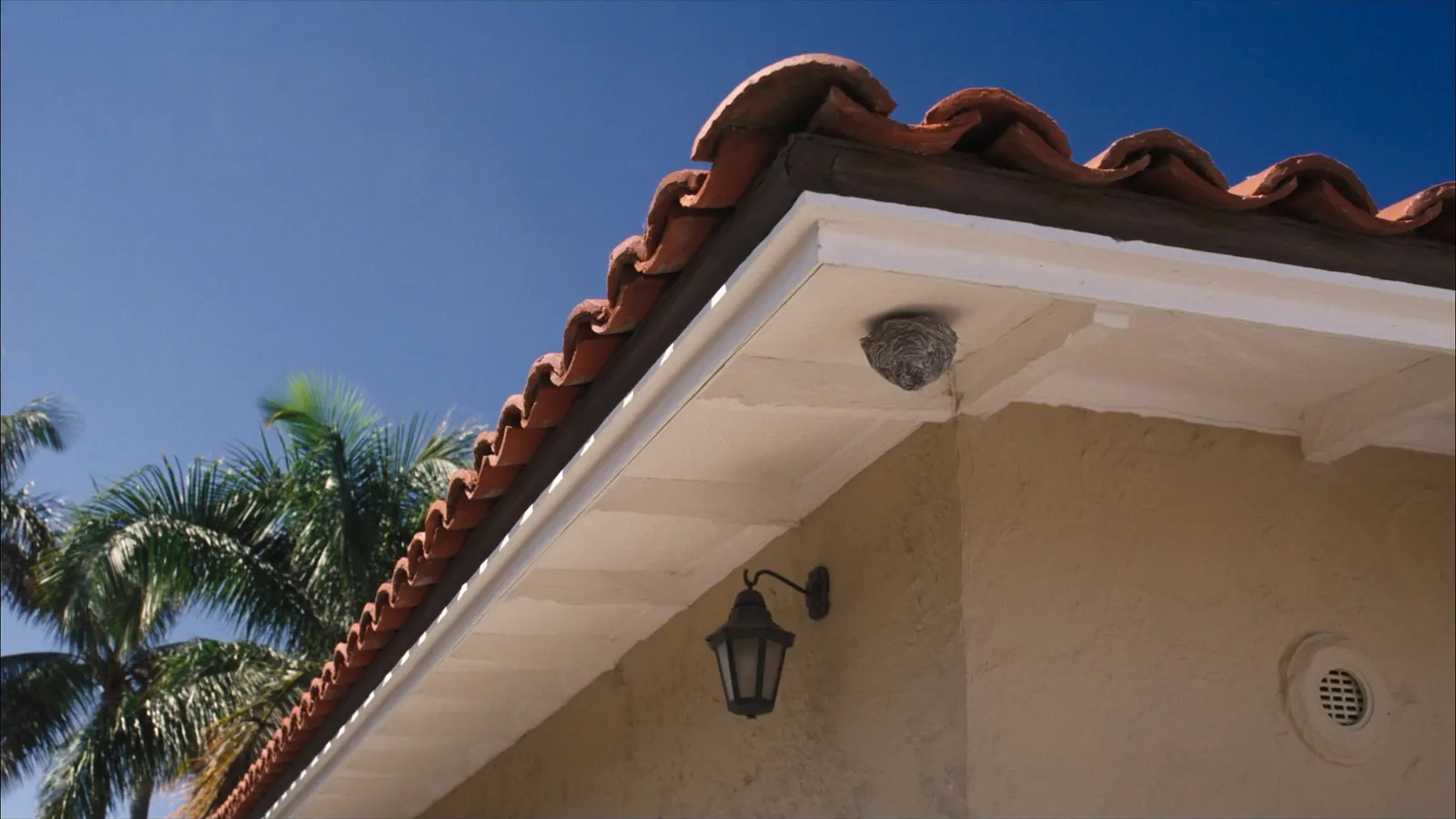
A knocked-down nest turns into an angry swarm fast. Say where it is and let someone with the right gear handle it.
Call (772) 783-1112 NowPaper Wasp Removal Around Miami Homes
Paper wasps are the most common "bee" call in the county, and Miami-Dade houses hand them endless shelter. They hang open, umbrella-shaped gray combs under soffits, inside light fixtures, behind accordion hurricane-shutter tracks, along the aluminum frame of a screened pool enclosure, and under the lip of the mailbox. Because South Florida rarely gets a real winter, nests that would die back up north can stay active most of the year here, and a spot that hosted one nest tends to attract another.
Paper wasps aren't aggressive from a distance, but a nest over the front door, beside the pool gate, or above the kid's bike rack is a sting waiting to happen. Knocking it down with a broom or a hose turns a calm nest into a cloud. A pro treats the comb first, removes it once activity stops, then treats the attachment point so returning wasps don't simply rebuild in the same corner. Ask about checking the rest of the soffit line too — in neighborhoods like Coral Gables and Coconut Grove, with deep overhangs and lush landscaping, there's rarely just one nest.
Yellow Jacket Removal: The Nest You Can't See
Yellow jackets are the serious end of this list. In Miami-Dade they mostly nest underground — in old root cavities, under pavers, along the edge of a canal bank, or beneath a landscape-rock border — and occasionally inside a wall void or an attic gap. You usually find out with a lawn mower or a string trimmer, when a steady stream of insects pours out of one small hole and starts stinging repeatedly.
Florida's mild winters let some yellow jacket colonies keep going instead of collapsing at frost, which means a ground nest left alone can keep growing. Do not pour gasoline, boiling water, or spray down the hole: it rarely reaches the comb and often just moves the entrance. If wasps are filing into a crack in your stucco or a gap at the roofline, don't seal it — a trapped colony will chew toward the inside of the house. Pros work these nests at dusk, when foragers are home, in full protective suits, with dust applicators that reach the buried comb. Flag the hole from a safe distance, keep kids and pets away, and call.
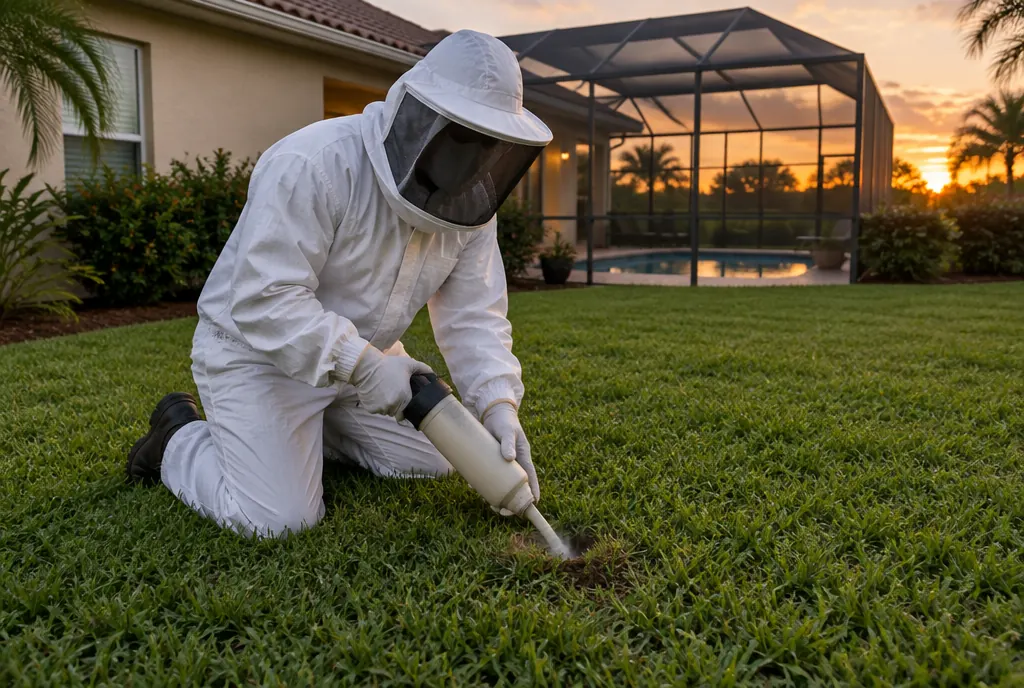
That's an established nest, and in Miami it never gets a frost to end it. Note the spot from a distance and describe it on the call.
Call (772) 783-1112 NowCarpenter Bee Control for Wood Trim, Pergolas and Fences
Most Miami-Dade homes are CBS block with a stucco skin, so carpenter bees can't do much to the walls. What they go after is the wood: fascia boards, exposed rafter tails, pergolas, wooden fences, dock and patio trim, and the painted-over wood on older houses in Miami Shores and the Grove. The sign is a perfectly round hole about the width of a finger, with a little pile of sawdust underneath. One season of holes looks cosmetic; several seasons of tunneling weakens trim and invites rot in this humidity.
Carpenter bees rarely sting, but they keep coming back to the same wood. A pro treats the active galleries, then advises on sealing and painting the wood once the bees are gone, because bare, weathered wood is what brings the next generation back.
What to Have Ready When You Call
- What it looks like. Gray paper comb = paper wasps. Busy hole in the ground or a wall crack = likely yellow jackets. Round holes plus sawdust = carpenter bees. A hanging cluster of fuzzy bees = the beekeeper exception above.
- Where it is. Height, distance from doors and the pool, and whether it's in the structure or the yard.
- Who's at risk. Anyone in the house with a sting allergy changes the urgency — say so up front.
Pricing depends on access and risk: a reachable eave nest is a short visit, while an in-ground or in-wall yellow jacket colony takes more. This line is a free call-connection service; the pros who answer are independent local businesses that you hire directly. For other insects and rodents, see the full list of Miami pest control services, and the Miami pest season guide covers when nests and swarms peak through the year.
A stinging-insect nest only gets bigger. Call (772) 783-1112 while it's still a one-visit job, or head back to the Miami-Dade pest control home page.
Pros prioritize those jobs. Describe the insect and the nest location and get it handled before anyone gets hurt.
Call (772) 783-1112 Now